By Cristian Daron
Most checkouts end at the order. That is the one moment a buyer has already decided to spend, and nothing asks them anything else. A post-purchase ladder uses that moment.
The layout
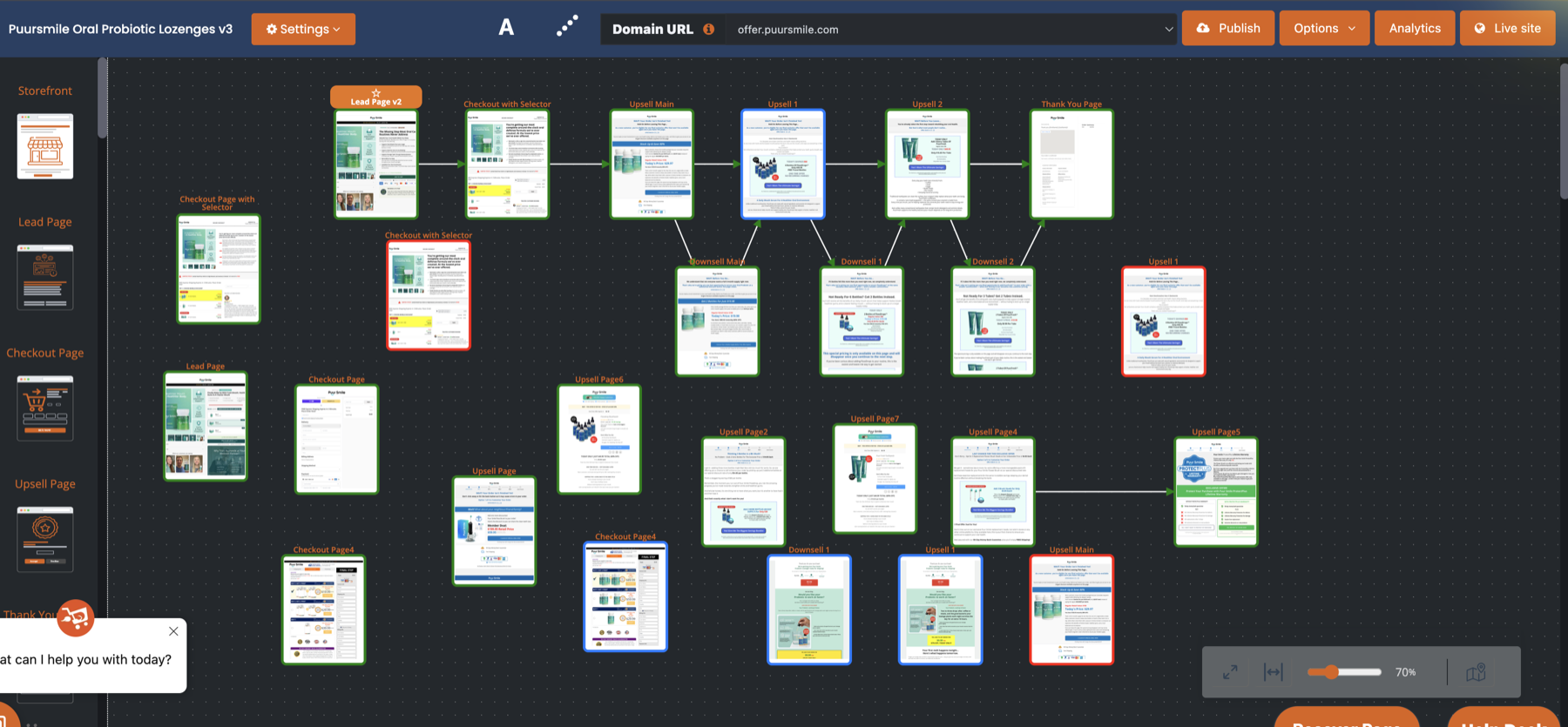
The funnel runs on its own domain, separate from the Shopify storefront: a lead page, a checkout with a product selector, three post-purchase upsells, three downsells, and a thank-you page. Alternate versions of each page are held ready, so a test is a switch rather than a rebuild.
One stage at a time
Stage one offers more of what they just bought: three of the oral probiotic, or two if they decline. Stage two moves to a second product from the same routine, FlossDrops, so the offer reads as a complement rather than a repeat. Stage three is the last offer, toothpaste, kept small enough to still be an easy yes.
Why every upsell has a downsell
These offers fire after the order is already placed, so a decline does not cost the sale. Without a downsell, a no ends the flow. With one, a no moves the buyer to a smaller quantity of the same product, which is often the offer they actually wanted.
Tracking from the first day
Conversion events were instrumented as the funnel was built, not added afterwards, so the reporting on each step could be trusted from the start. I also built the team's reusable Checkout Champ foundation and documented it, so the in-house developer could duplicate the working funnel for new landing pages and checkout tests.
Why there are no percentages here
These funnels launched during the engagement, so any comparison with the period before starts from almost nothing. A percentage lift on a near-zero baseline is an artefact of where it started, not a measure of the work. I quote absolute figures only, and describe what each step does.