By Cristian Daron
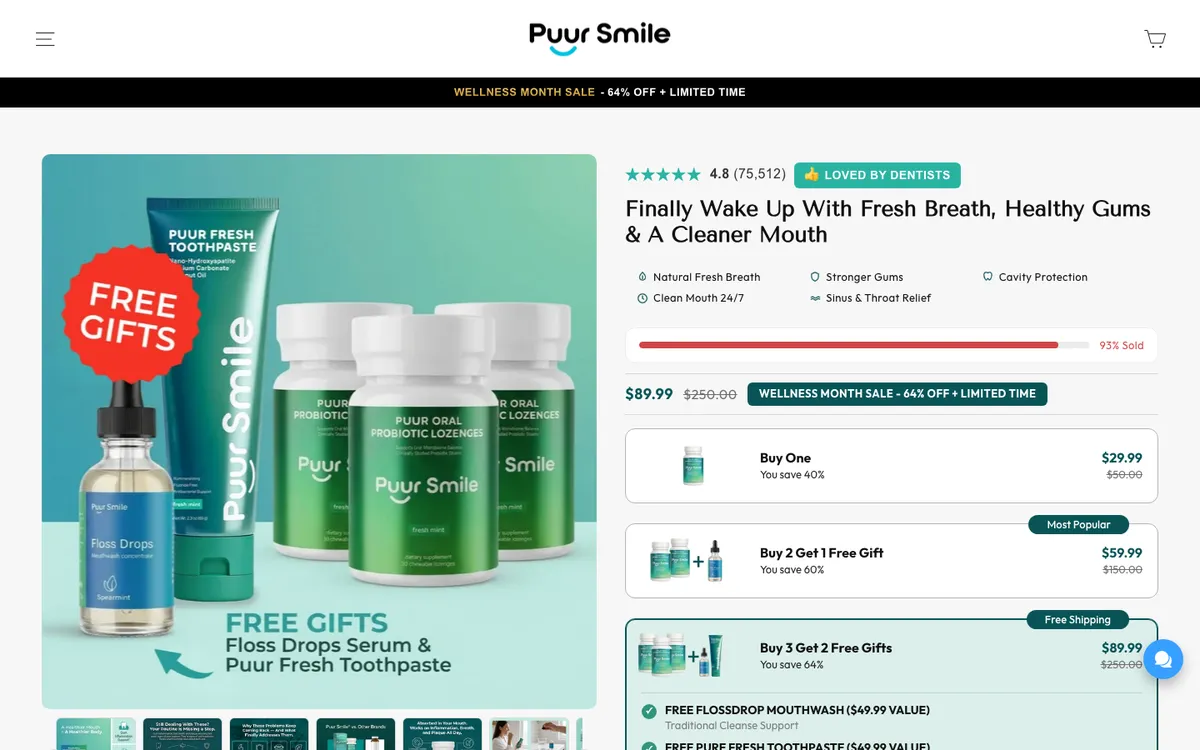
Over six months on the Puur Smile account I built and maintained 192 product pages and pre-landers: direct-response product pages, advertorials, ranking pages, listicles and journal-style bridges, in Shopify, Replo and GemPages. They were not 192 separate projects. They were one testing programme, the same page rebuilt against a different hook, offer or layout.
The risk is losing track
At that pace the risk is not one bad page. It is losing track: which variant is live, which one won, what changed in the theme last week, and whether tracking still fires on the page the ads point at. The team was a fast-moving mix of in-house staff and contractors.
A tracker before a backlog
I created a PageSpeed and implementation tracker and an internal development roadmap, so every page had a status and a record of what changed. Variants that lost were retired rather than renamed, so the numbering stayed the store's own and the gaps in it are real.
One path for every page
Every page went through the same path: Dev, then Self-QA, then a tracker update, then QA review. Reusable QA checklists covered product pages, advertorials, landing pages, cart, checkout, forms, tracking and responsive layout, so a reviewer checked the same things every time rather than whatever came to mind.
Staging first
Changes went to staging before the live theme, with agreed naming, clear handoffs and planned releases instead of one-off live edits. I gave the in-house developer technical direction on those patterns, so the workflow did not depend on me being the one shipping.
What I would keep on any team
Give every page a status, check every page against the same list, and never edit the live theme directly. It is less exciting than the pages themselves, and it is what lets the pages ship quickly without breaking anything.