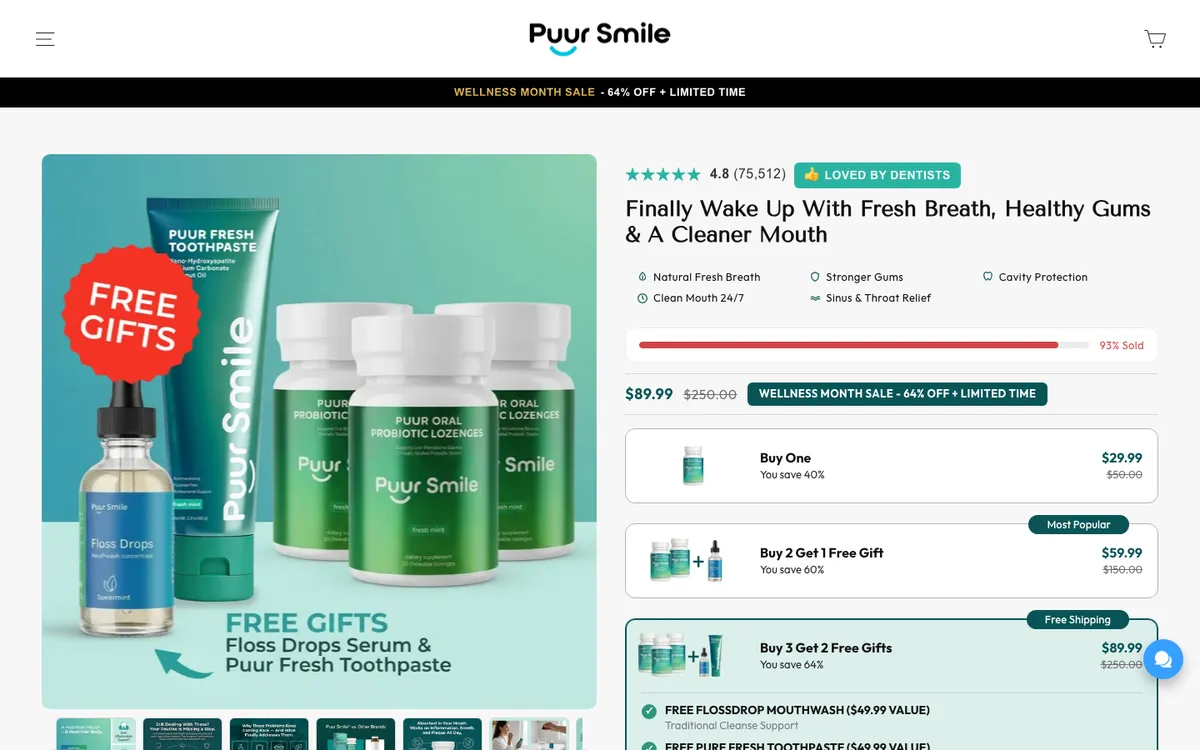
PuurSmile · 1 Mar to 19 Sep 2026 · Human sessions
One oral probiotic PDP. 8,546 sessions reached checkout.
- Landing sessions
- 202,168
- On the measured v3 page
- Added to cart
- 4.56%
- 9,227 sessions
- Reached checkout
- 4.23%
- 8,546 sessions
Shopify sessions by landing page. Rates describe visits that included each action, rather than completed orders. Offers and traffic also contribute to these results.
Measured URL: /products/oral-probiotic-lozenges-v3
These figures belong to v3, rather than the later v3-1-3 page linked elsewhere in this portfolio. The report aggregates every session landing on that URL during the period, including any revisions made to it.
The reasons-to-buy page, measured separately
97,833 landing sessions; 4,217 with cart additions (4.31%); 2,829 reaching checkout (2.89%). Checkout could happen later in the same session on another page.
Measured URL: /pages/reasons-v1-1
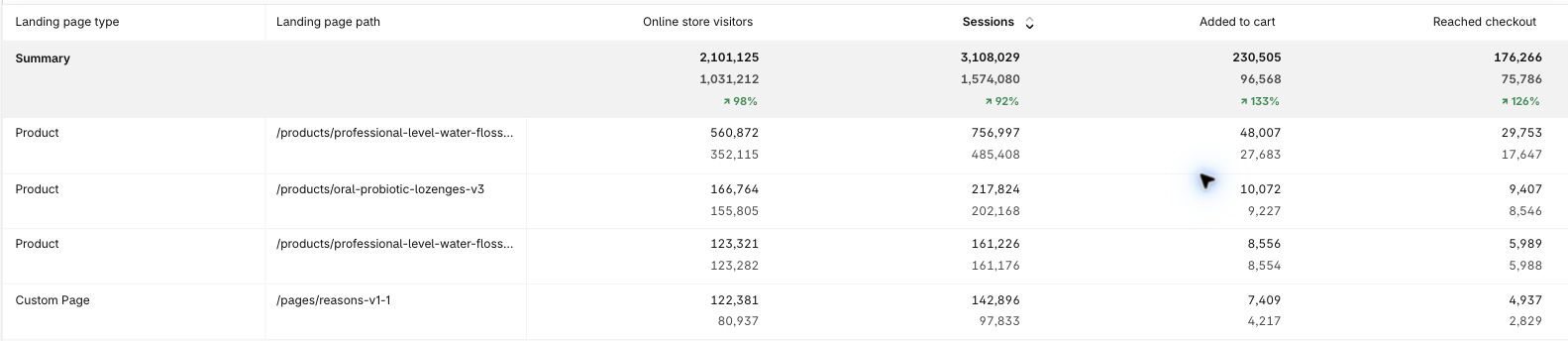
Report dates and how the percentages were calculated

The engagement figures are the report's comparison lines for 1 March to 19 September 2026, filtered to human sessions. Each percentage is that page's qualifying sessions divided by its landing sessions, multiplied by 100 and rounded to two decimals.
Oral probiotic cart rate: 9,227 ÷ 202,168 × 100 = 4.56%. Checkout-reaching rate: 8,546 ÷ 202,168 × 100 = 4.23%. Sessions are visits, rather than unique people or orders.
The two report windows overlap and differ in length. Their growth percentages are not used as redesign results. The page, audience, advertising, pricing and offer all contribute to the observed rates.
Download the transcribed engagement figures (CSV)- Shopify
- Liquid
- Custom apps
- Checkout Champ
- A/B testing
- Recharge
Situation
Paid traffic landed on product pages that tried to say everything at once. No clear offer above the fold, proof buried three scrolls down, and a mobile layout where the add-to-cart disappeared as soon as you started reading. Checkout ended at the order, so nothing captured the buyer at the one moment they had already decided to spend.
What I did
Rebuilt the product pages around a single offer, with bundle and subscription selectors and a sticky mobile add-to-cart, then a standing library of advertorials and landing pages shipped as testable variants. Where the platform got in the way I wrote custom Shopify apps rather than working around it: the dental membership portal, a Buy X Get Y app that adds free gifts inside checkout so they survive Shop Pay and express checkout, and a discount engine that collapses the whole free-gift programme into a single rule. Separately, audited and cleaned a theme that had drifted into hardcoded IDs, duplicate scripts, and page-builder blocks carrying their own inline code. AI carried a real share of the throughput here: Claude Code and ChatGPT in the build, and the generation features in GemPages and Replo for page variants, with everything reviewed before it shipped.
Page-level results
From 1 March to 19 September 2026, the oral probiotic v3 URL recorded 202,168 human landing sessions. Of those, 9,227 included a cart addition (4.56%) and 8,546 reached checkout (4.23%). The reasons-to-buy page recorded another 97,833 landing sessions, with 4,217 cart additions (4.31%) and 2,829 reaching checkout (2.89%). These are session outcomes associated with the measured URLs, rather than completed orders or an isolated design lift. The original report and calculations appear above.
Why the page was built this way
The oral probiotic page had to explain an unfamiliar product and make the buying decision manageable. Product education addressed what the product was for; bundle and subscription selectors made the offer actionable; a sticky mobile add-to-cart kept the purchase action within reach while visitors read. Those were the design decisions behind the build. The landing-page report shows the resulting purchase intent, but it cannot tell us which element contributed most.
Outcome
The clearest result is a controlled one: adding express payment methods to the product page lifted conversion 24.89% in an A/B test, with the interval entirely above zero, so ad spend cannot explain it. Across the period I owned the storefront the store's conversion rate rose 59% to 3.59%, which is shared work, since offers and pricing move that rate too. Revenue on a store doing roughly $2M a month was a team result and I do not claim it. What is plainly mine: 192 product pages and pre-landers shipped as one testing programme, with the reasons-to-buy page reaching its eighteenth iteration, the membership, free-gift and discount apps in production, and a post-purchase upsell ladder on its own domain.